Foreign Manufacturer Certification Agency India
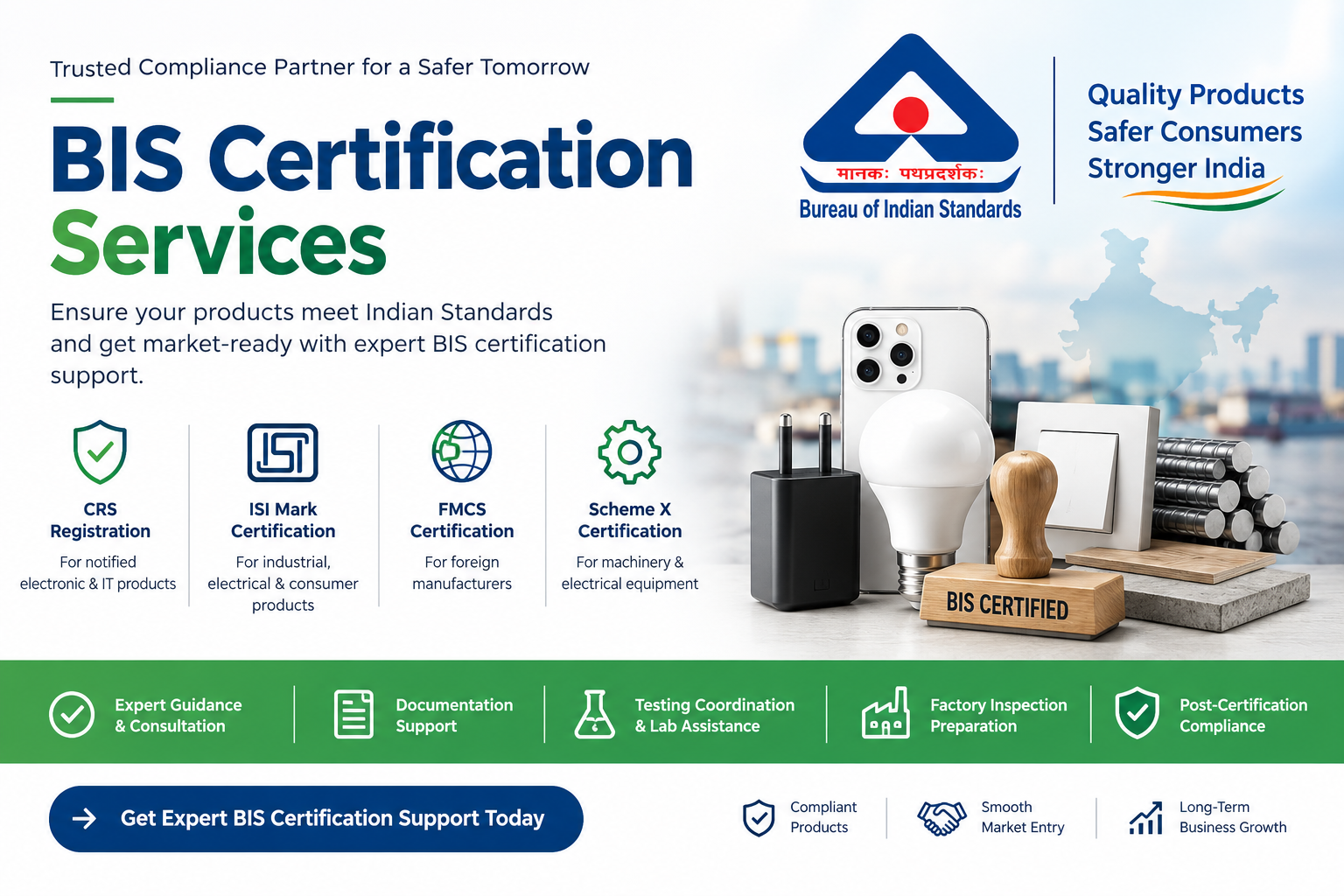
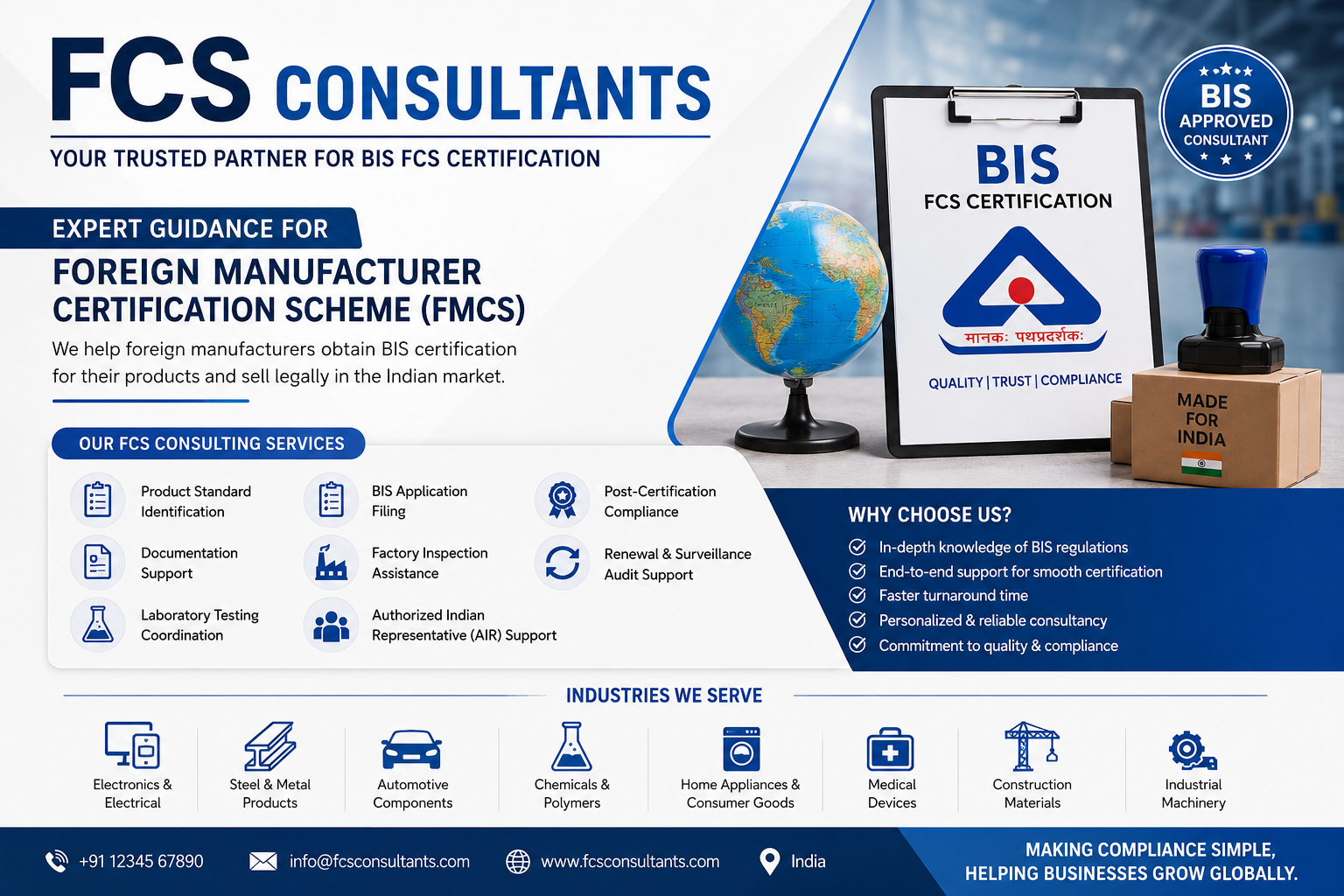
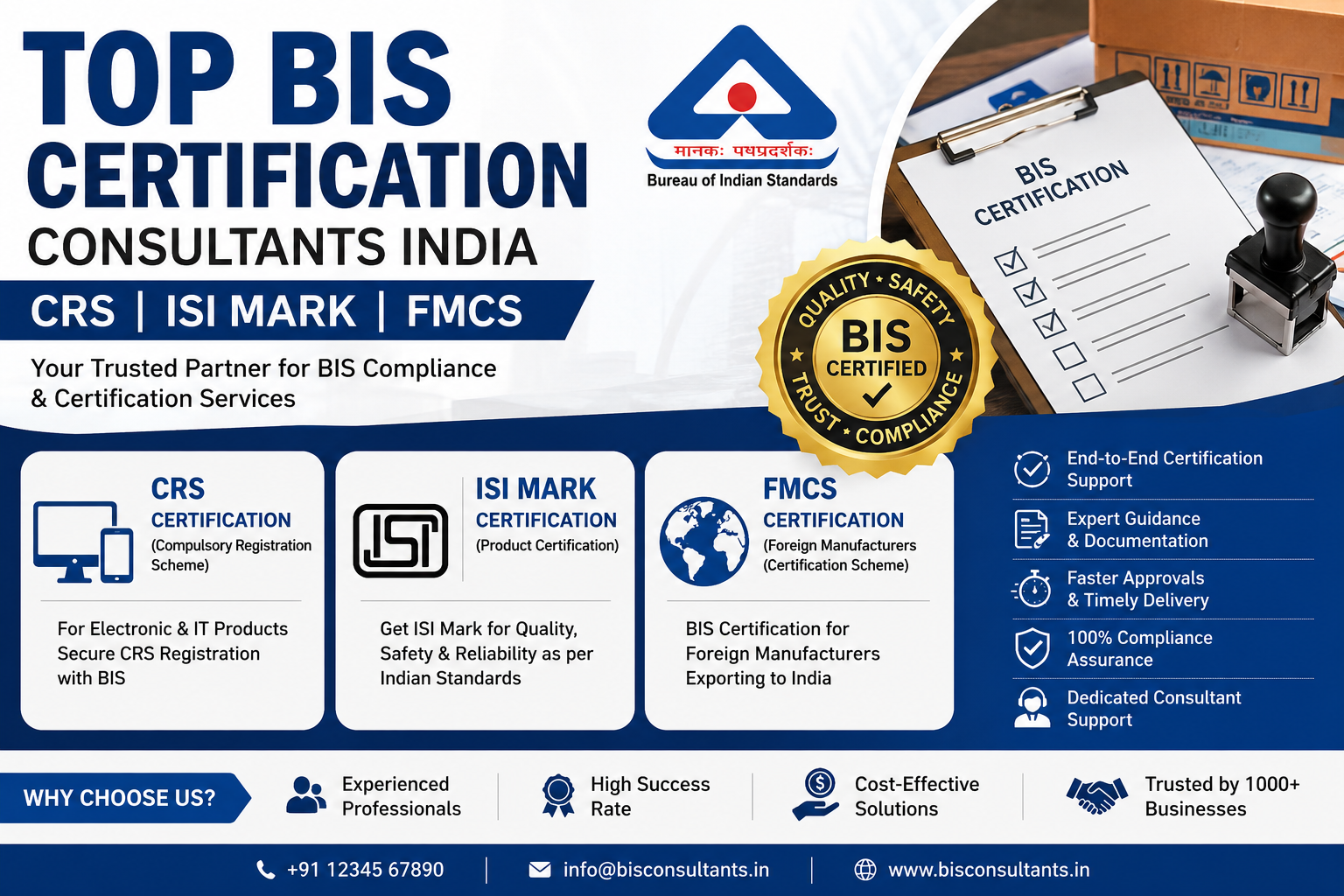
India is one of the world's largest and fastest-growing markets for electrical appliances, electronics, industrial equipment, construction materials, and consumer products. Foreign manufacturers looking to enter the Indian market must understand the applicable product quality standards, certification requirements, and regulatory procedures. A Foreign Manufacturer Certification Agency India helps international manufacturers navigate these requirements and prepare for product certification and regulatory compliance. Foreign manufacturers may need certifications from the Bureau of Indian Standards (BIS) or approvals from other relevant Indian regulatory authorities, depending on the product category. These requirements help ensure that imported products meet applicable Indian safety, quality, and performance standards. A professional foreign manufacturer certification consultant can assist overseas manufacturers with identifying applicable regulations, preparing technical documents, coordinating product testing, and managing certification applications. With appropriate compliance support, businesses can reduce documentation errors, avoid unnecessary delays, and establish a smoother process for entering the Indian market. Foreign manufacturer certification refers to the process through which an overseas manufacturing company obtains the necessary certification or regulatory approval to sell specific products in India. The applicable certification depends on the product, the relevant Indian Standard, and the regulations in force. The Bureau of Indian Standards is India's national standards body and administers several product certification schemes. Certain products manufactured outside India must comply with mandatory BIS requirements before they can be imported, distributed, or sold in the Indian market. For example, eligible foreign manufacturers may need to apply under the Foreign Manufacturers Certification Scheme (FMCS) or the Compulsory Registration Scheme (CRS), depending on the product and applicable regulations. Other products may fall under different certification schemes or regulatory authorities. Understanding the correct certification route is essential because the requirements for an electrical appliance may differ significantly from those for industrial machinery, construction materials, or electronic equipment. Obtaining Indian product certification can be challenging for overseas companies unfamiliar with Indian regulations and application procedures. A specialized certification agency provides guidance throughout the compliance process. Key benefits include: Regulatory guidance: Helps identify the applicable Indian Standard, product category, and certification scheme. Documentation assistance: Supports the preparation and review of technical documents required for an application. Product testing coordination: Helps manufacturers understand applicable testing requirements and coordinate with appropriate laboratories. Application support: Assists with application preparation, submission, and communication with the relevant authority. Compliance planning: Helps businesses understand product-specific obligations before exporting goods to India. Reduced documentation errors: Reviews application information to identify inconsistencies and missing documents. Market-entry preparation: Helps foreign manufacturers plan certification activities before launching products in India. An experienced consultant can simplify the administrative process, although certification decisions remain with the competent regulatory authority. The Foreign Manufacturers Certification Scheme is an important BIS certification route for eligible products manufactured outside India. Under this scheme, foreign manufacturers can apply for a BIS licence to use the Standard Mark on products covered by the applicable Indian Standards and certification requirements. FMCS is relevant to foreign manufacturing facilities producing products for which certification under this scheme is applicable. 1. Certification for overseas manufacturers The scheme allows eligible manufacturers located outside India to seek BIS certification for covered products. 2. Product testing Products must undergo the testing required under the applicable Indian Standard and certification procedure. 3. Factory assessment BIS may conduct a factory inspection to evaluate manufacturing facilities, quality-control systems, testing arrangements, and other relevant requirements. 4. Documentation requirements Applicants generally need to prepare information about the manufacturing facility, product specifications, quality-control arrangements, and other prescribed details. 5. Authorized Indian Representative Foreign manufacturers may need to appoint an Authorized Indian Representative (AIR), subject to the applicable scheme requirements. The AIR helps facilitate communication and coordination with BIS in India. The precise requirements depend on the product category and the current BIS scheme guidelines. The Compulsory Registration Scheme is another important compliance route for foreign manufacturers supplying specified electronic and information technology products to India. Products covered by applicable Quality Control Orders or CRS requirements must satisfy the relevant registration conditions before being marketed in India. Depending on the product category, the process may involve product testing at a BIS-recognized laboratory, preparation of technical documentation, online registration, and compliance with applicable marking requirements. A foreign manufacturer certification agency in India can help overseas businesses determine whether their products fall under CRS, FMCS, or another applicable certification framework. It is important to confirm the current product list and regulatory requirements before beginning the application process. The documentation required varies according to the certification scheme and product category. However, manufacturers may need to prepare the following documents: Company registration certificate or manufacturing business details. Manufacturing facility address and contact information. Product specifications and technical datasheets. Product drawings, photographs, and model details. Applicable Indian Standard information. Factory layout and manufacturing process details, where required. Quality-control procedures and inspection records. Testing equipment details and calibration records, where applicable. Product test reports from an acceptable laboratory, as required. Details of the authorized signatory. Authorized Indian Representative documents, where applicable. Trademark authorization or brand ownership documents, where required. Prescribed application forms, declarations, and undertakings. All submitted information should be accurate, consistent, and aligned with the requirements of the relevant certification scheme. The first step is to determine whether the product is covered by a mandatory Indian certification or registration requirement. The relevant Indian Standard and applicable Quality Control Order should be identified. The manufacturer must determine whether FMCS, CRS, or another certification or approval route applies to the product. The company should organize product specifications, manufacturing details, quality-control information, and other documents required by the relevant authority. Where testing is mandatory, the manufacturer must follow the applicable testing procedure and use a laboratory acceptable under the relevant scheme. The application and supporting documents must be submitted through the prescribed process. The applicant should verify that all information is complete and accurate. Where required, the competent authority may assess the manufacturing facility, quality-control procedures, or other technical aspects of the application. If the authority raises questions or identifies deficiencies, the manufacturer must provide the requested clarifications or corrective information. The authority evaluates the application against the applicable requirements. The manufacturer may market covered products in India only after obtaining the required approval and meeting the relevant conditions. Depending on current Indian regulations, foreign manufacturers in several industries may need product certification or regulatory approval. Examples include: Electrical appliances and electronic products. Information technology equipment. Batteries and selected industrial products. Cement and construction materials. Steel and other specified metal products. Household and consumer products. Industrial equipment and components. Products covered by specific Indian Quality Control Orders. Not every product in these categories automatically requires the same certification. The exact product description, applicable standard, manufacturing location, and current regulatory notification must be checked before proceeding. Selecting an experienced consultant can help overseas manufacturers manage complex compliance requirements more efficiently. Consider the following factors when choosing a foreign manufacturer certification agency in India: Industry experience: Look for experience with the relevant product category and certification scheme. Regulatory knowledge: The consultant should understand applicable BIS procedures and other relevant Indian regulations. Testing coordination: Confirm that the agency can guide you regarding the appropriate testing requirements and acceptable laboratories. Documentation support: Choose a consultant who can assist with technical documentation and application preparation. Transparent communication: The agency should clearly explain the process, expected responsibilities, applicable government fees, and potential challenges. Realistic timelines: Certification timelines depend on testing, document readiness, inspections, and regulatory review. Avoid providers who guarantee approval without completing the prescribed process. A consultant provides professional assistance but cannot replace the decision-making authority of BIS or another competent regulator. Entering the Indian market involves more than shipping products to an importer. Manufacturers must evaluate applicable product regulations, certification obligations, labelling requirements, and other legal conditions before commercial distribution. Professional compliance support can help businesses identify regulatory requirements early, organize documents, coordinate testing, and address application-related queries. This preparation is particularly valuable for international companies managing certification remotely from overseas locations. By working with an experienced foreign manufacturer certification consultant in India, businesses can develop a clearer compliance strategy and reduce avoidable administrative complications. A Foreign Manufacturer Certification Agency India supports international manufacturers seeking to meet Indian product certification and regulatory requirements. From identifying the appropriate BIS scheme to coordinating testing, preparing documentation, and assisting with application procedures, professional consulting services can make the certification journey easier to manage. Foreign manufacturers should verify the latest requirements for their specific products before exporting them to India. Choosing the correct certification route, maintaining accurate technical records, and complying with all applicable conditions can help businesses build a reliable foundation for long-term growth in the Indian market. 1. What is a foreign manufacturer certification agency in India? It is a consultancy or service provider that assists overseas manufacturers with Indian product certification, documentation, testing coordination, and regulatory compliance procedures. 2. What is BIS FMCS certification? FMCS is a BIS scheme through which eligible foreign manufacturing facilities can obtain certification for products covered by the applicable requirements. 3. Do all foreign manufacturers need BIS certification? No. BIS certification is mandatory only for products covered by applicable compulsory certification or registration requirements. Other products may be subject to different regulations. 4. What is the difference between FMCS and CRS? FMCS and CRS are different BIS certification frameworks with different scopes and procedures. The applicable route depends on the product and the relevant regulatory requirements. 5. Is an Authorized Indian Representative required? An AIR may be required for foreign manufacturers under the applicable scheme. The appointment and eligibility requirements should be confirmed for the specific application. 6. How long does foreign manufacturer certification take? The timeline varies depending on product testing, documentation, factory inspection, application review, and the relevant authority's requirements. 7. Can a certification consultant guarantee BIS approval? No consultant can guarantee approval. The relevant authority makes the final decision based on compliance with the applicable requirements. 8. How can foreign manufacturers start the certification process? They should identify their product category, verify the applicable Indian Standard and certification scheme, prepare the required documents, and obtain professional guidance where necessary.What Is Foreign Manufacturer Certification?
Importance of a Foreign Manufacturer Certification Agency in India
BIS Foreign Manufacturers Certification Scheme (FMCS)
Key Features of FMCS
BIS CRS Certification for Foreign Manufacturers
Documents Required for Foreign Manufacturer Certification
Step-by-Step Process for Foreign Manufacturer Certification in India
Step 1: Identify the Applicable Standard
Step 2: Select the Correct Certification Scheme
Step 3: Prepare Technical Documentation
Step 4: Coordinate Product Testing
Step 5: Submit the Application
Step 6: Factory Inspection or Technical Evaluation
Step 7: Address Observations
Step 8: Obtain Certification or Registration
Products That May Require Foreign Manufacturer Certification
How to Choose the Right Foreign Manufacturer Certification Consultant
Why Foreign Manufacturers Need Professional Compliance Support
Conclusion
Frequently Asked Questions (FAQs)