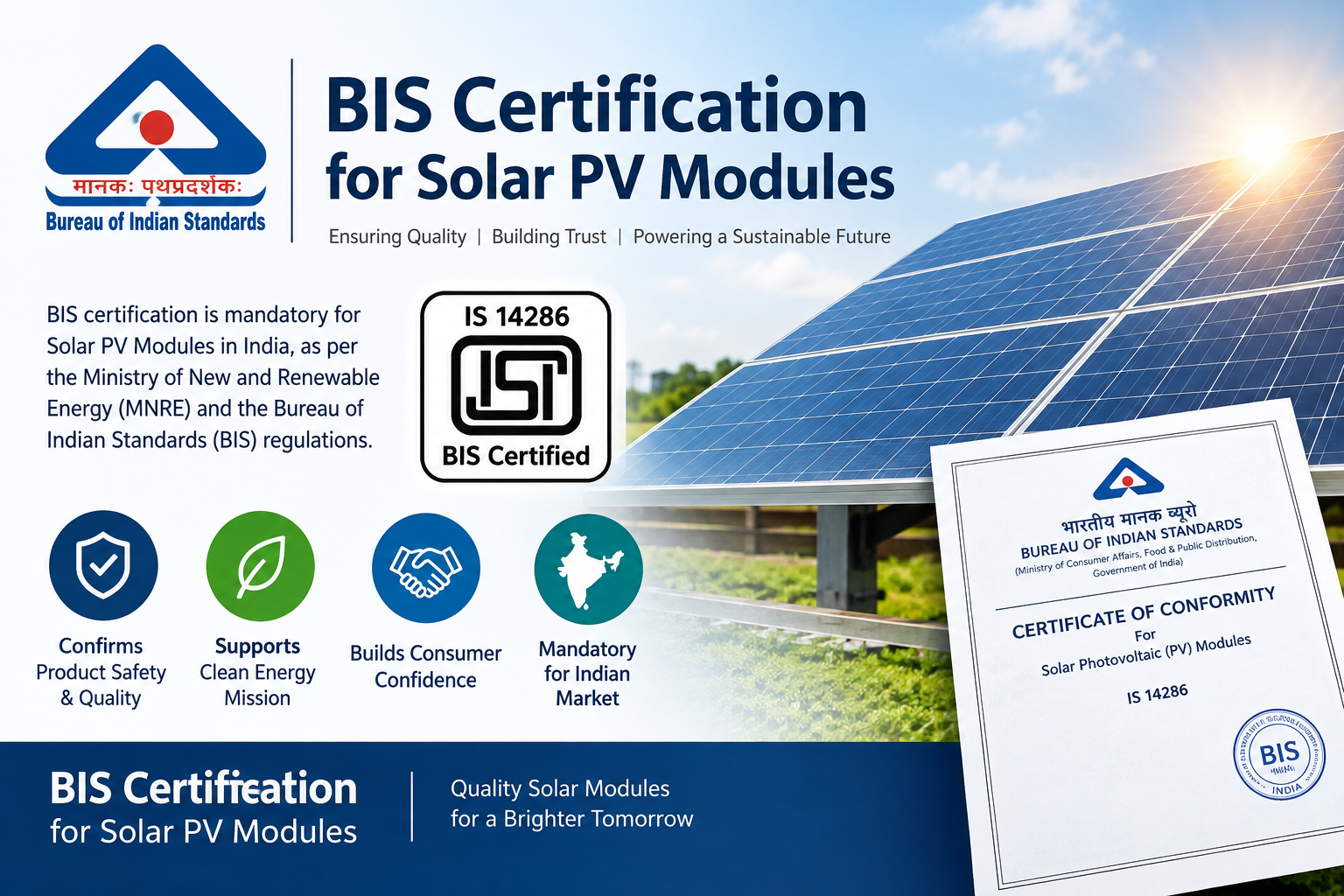
BIS Certification for Solar PV Modules
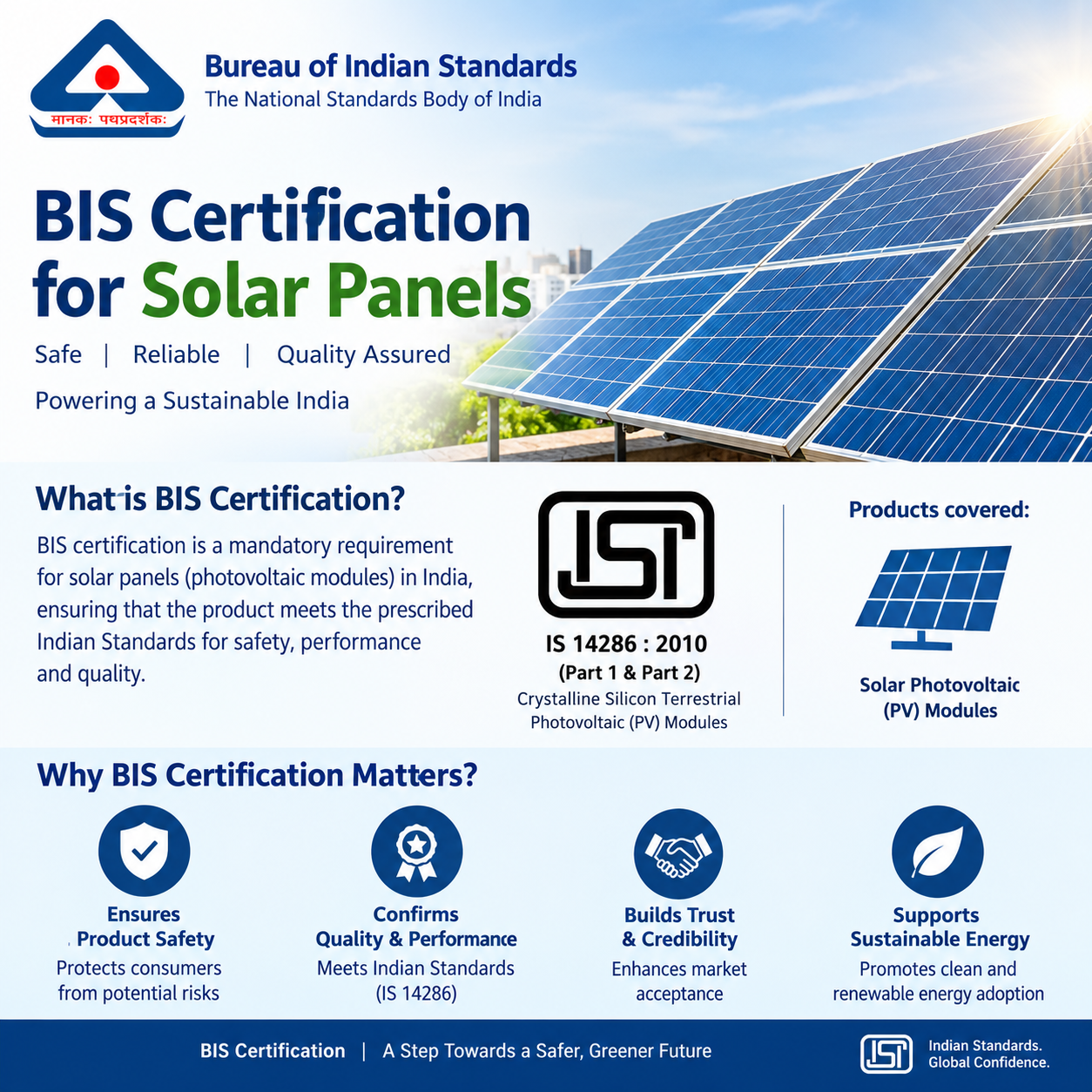
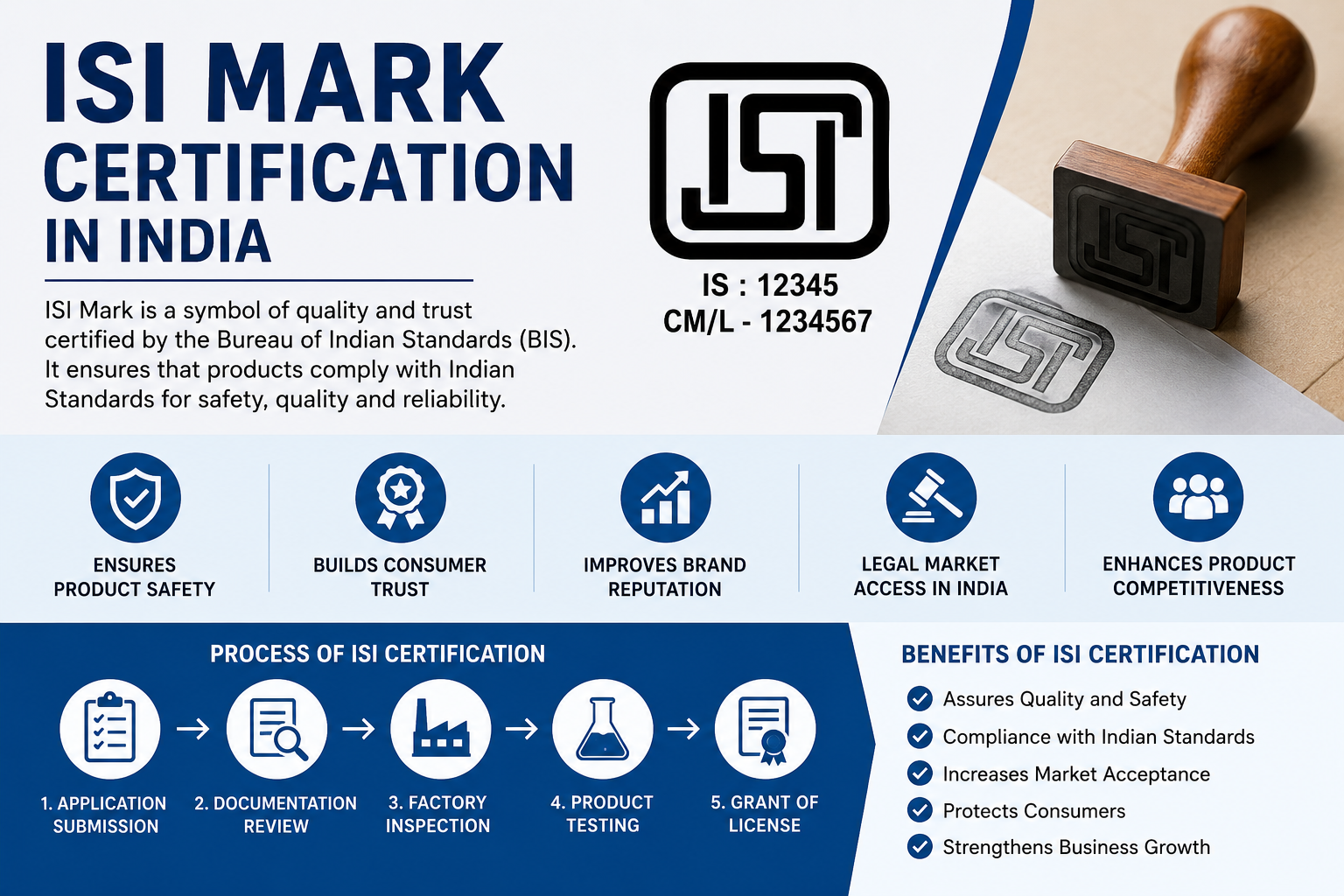
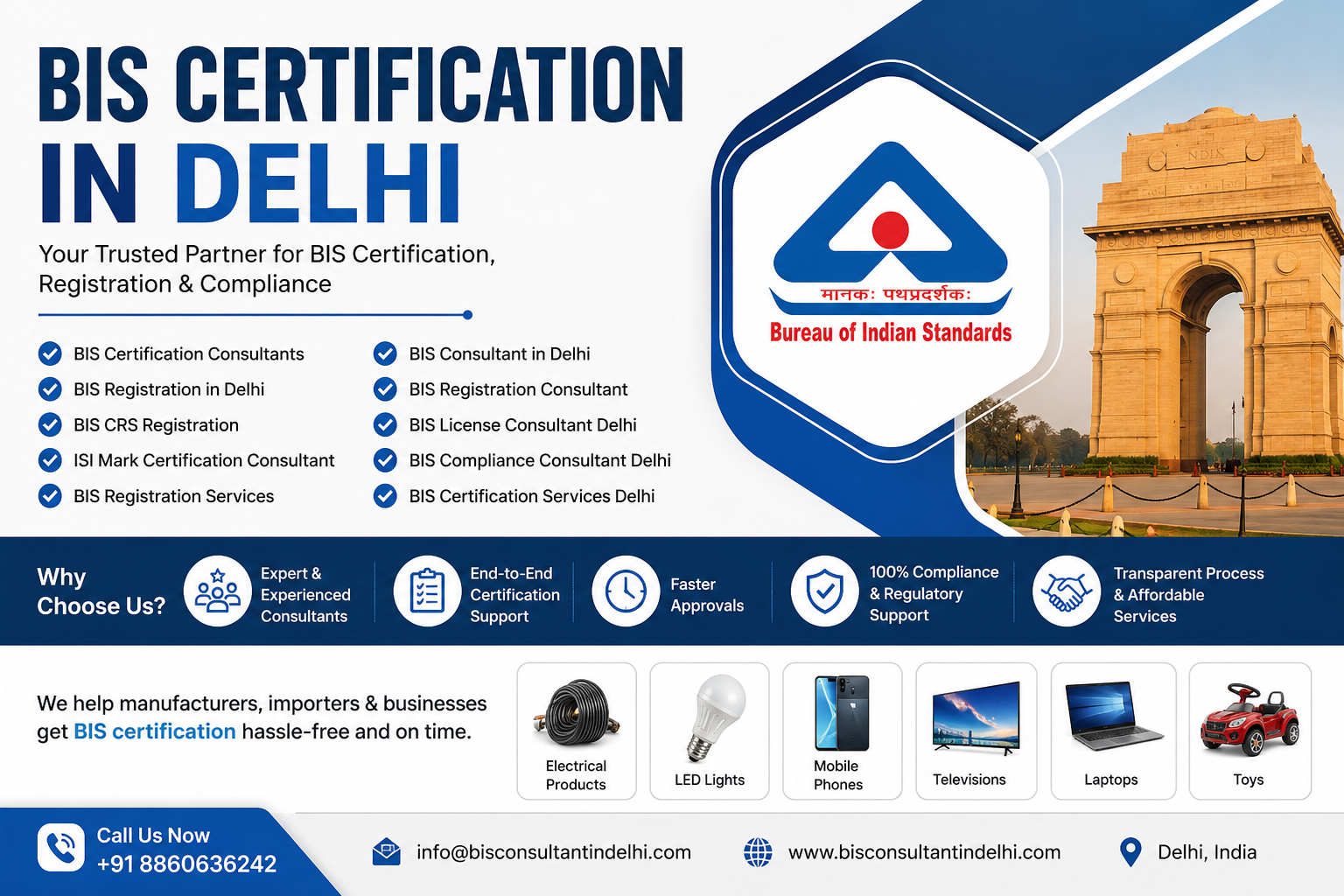
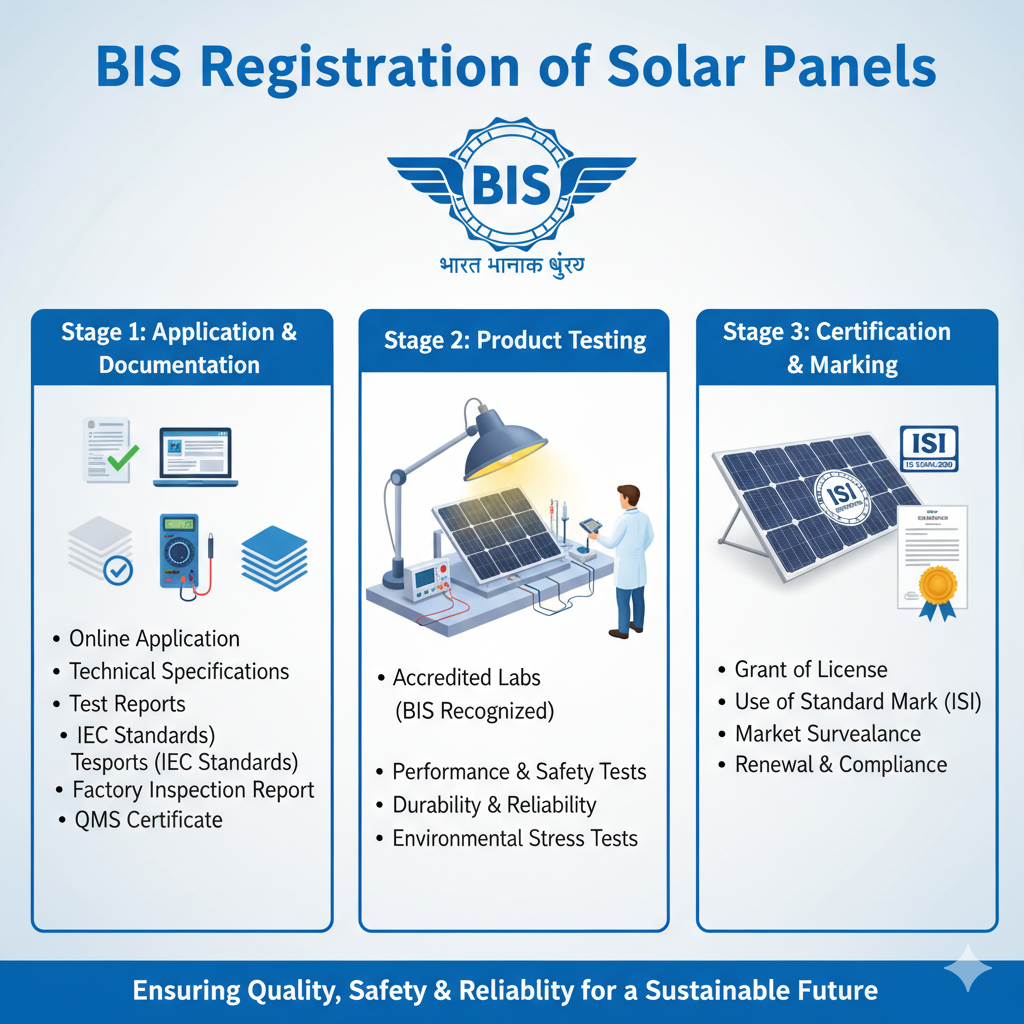
Solar photovoltaic (PV) modules are an important part of India’s renewable energy ecosystem. As solar power installations continue to expand across residential, commercial, industrial, and utility-scale projects, ensuring the quality, safety, and reliability of PV modules has become increasingly important. BIS certification for solar PV modules helps manufacturers and suppliers demonstrate that their products comply with applicable Indian Standards and regulatory requirements. The Bureau of Indian Standards (BIS) develops and maintains standards for various products to promote quality, safety, and consistency. For solar PV modules, manufacturers may need to comply with the applicable Indian Standard, Quality Control Order (QCO), testing requirements, and certification or registration framework depending on the product category and current regulatory provisions. BIS certification is a conformity assessment mechanism through which a product is evaluated against specified Indian Standards. For solar PV modules, the applicable requirements can cover aspects such as electrical safety, construction, performance, durability, environmental resistance, and product testing. Solar PV module manufacturers need to identify the Indian Standard applicable to their particular module technology and product configuration. The certification process generally involves documentation, product testing at recognized laboratories, factory-related assessment where applicable, and submission of the required information to BIS. For manufacturers supplying solar modules to the Indian market, understanding the applicable regulatory requirements before production or import can help avoid delays in certification and market access. Solar PV modules are exposed to outdoor conditions for many years. They must operate safely and reliably under sunlight, temperature variations, humidity, mechanical loads, and other environmental conditions. BIS-related compliance helps establish that the product has been evaluated against applicable requirements. It can provide manufacturers with a structured framework for demonstrating product quality and conformity. Key benefits of compliance may include: Demonstrating conformity with applicable Indian Standards Supporting product safety and reliability Meeting applicable regulatory requirements Facilitating smootWhat is BIS Certification for Solar PV Modules?
Why is BIS Certification Important for Solar PV Modules?